A short history of Big Ben
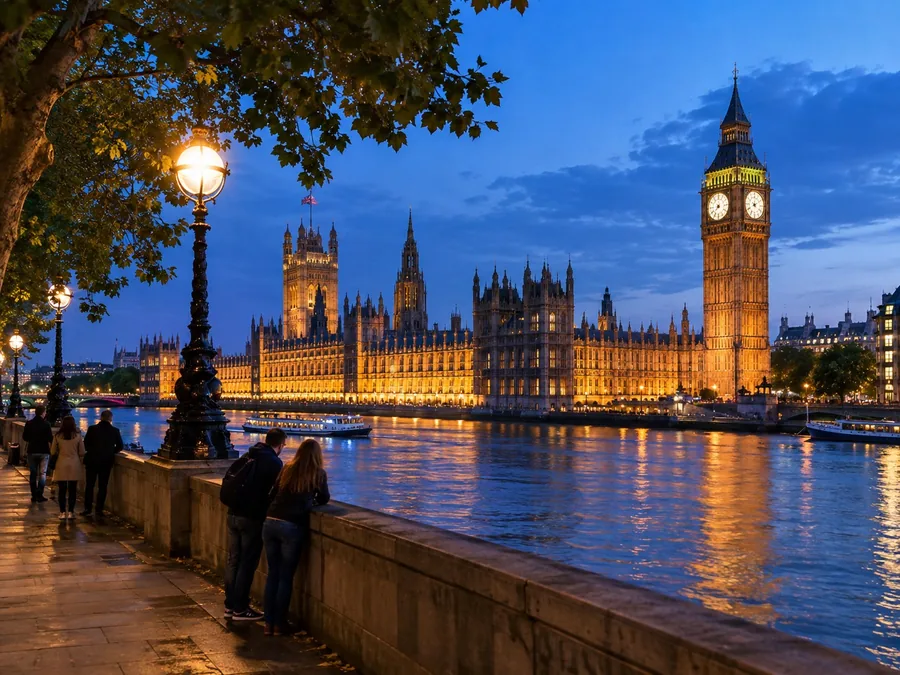
Which tour gets you closest?No tour sold on GetYourGuide climbs the Elizabeth Tower — UK Parliament runs that one itself. What you can book here is the building Big Ben belongs to, with a ticket inside the Houses of Parliament, or a guided walk past the tower, the Abbey and Buckingham Palace.
Compare the optionsAfter the 1834 fire
The fire of 1834 destroyed most of the old Palace of Westminster. It was rebuilt from 1840 to 1876 to designs by Charles Barry, with A.W.N. Pugin, and the clock tower went up between its foundation stone in 1843 and completion in 1859. The clock started on 31 May 1859, and Big Ben first struck on 11 July 1859. Westminster Hall, from the reign of William II and traditionally dated 1097, is the oldest part of the Palace, and it is where Parliament’s tower tour begins today; the details are on going inside Big Ben.
The bell itself took two attempts. The first, cast in 1856, cracked in testing in 1857. The second, cast at Whitechapel in 1858, cracked within months of its first strike in 1859, and in 1863 it was turned 90° and given a lighter hammer. It has rung cracked ever since. The weights, the dials and the rest are on Big Ben facts.
Lights, broadcasts and a slow clock
The dials have been lit from dusk to dawn since 1876, by gas at first and by electricity from 1906. Above the belfry, the Ayrton Light shines when Parliament is sitting after dark. Its start date depends on whom you ask: Wikipedia credits Acton Smee Ayrton with adding it in 1873, while Parliament describes experiments in the 1870s and a permanent light from 1892, run on gas until 1903.
BBC radio first broadcast the bongs on New Year’s Eve 1923, and the world heard them from 1932. In 1930 an MP complained that Big Ben was 3 minutes slow; the minister answered that all the other clocks were wrong.
How Big Ben came through the war
From 1939 to April 1945 the dials and the Ayrton Light were kept dark under the blackout rules. The Palace was hit by bombs 14 times. The raids of 10 and 11 May 1941 did the most damage: the Commons Chamber was destroyed and the roof of Westminster Hall caught fire. A small bomb hit the clock tower and broke all the glass in the south dial. The clock and bells were not damaged, and the chimes were broadcast as normal.
So the answer to how Big Ben survived is less dramatic than people hope: the bomb that reached the tower was a small one, it smashed a dial, and the clockwork and bells behind it came through. The rebuilt Commons Chamber was finished in 1950. The damage to the tower turned out to be worse than first thought, as the 2017 survey found, because the post-war repairs had been limited by austerity (Parliament’s questions and answers on the works).
One correction I make often: the tower was not painted black for the war. The dials went dark for the blackout, but the black paint had been there since the 1930s.
Stoppages, starlings and 1976
The clock has stopped more often than its reputation suggests. It was out for 2 months in 1934 and 6 months in 1956. In 1949 starlings perched on a minute hand and slowed it by 4.5 minutes. It stopped for 2 days in 2005, at 10:07 pm, probably because of the heat, and for 6 weeks in 2007, from 11 August to 1 October. When Big Ben cannot strike, a bell at St Paul’s stands in: the recast bell from the medieval Westminster clock tower.
The worst night was 5 August 1976. The air-brake speed regulator in the chiming mechanism broke from metal fatigue after more than a hundred years, the weights ran out of control, and the mechanism was badly damaged. Accounts of the aftermath differ. Parliament says the clock was silent “for nearly nine months”, with repairs finished for Elizabeth II’s Silver Jubilee visit in May 1977. Wikipedia says the clock itself was shut down for a total of 26 days across those nine months and restarted on 9 May 1977, while the bells stayed silent for about nine months. The two fit together once you separate the clock from the bells; Parliament’s version is in Parliament’s key dates for the tower.
The bell has marked deaths as well as hours. It tolled slowly for Edward VII, George V, George VI and Elizabeth II, and it was silent for Churchill’s funeral.
Why Big Ben shut down in 2017
I watched the scaffolding go up in 2017 and come down in 2022, and for five years the tower was a grey cage with a clock face peering out. The work covered the whole tower, from the gilt cross and orb to the bottom of the staircase, and the previous major repairs had been in 1983–85. The reasons, as Parliament gives them:
- crumbling stone, rusting ironwork and leaking roofs;
- an ageing clock at risk of failing;
- pollution damage, and black paint around the dials that had stopped the stone breathing;
- asbestos in unexpected places;
- Second World War damage worse than first thought.
The bells fell silent on 21 August 2017 but still sounded for New Year’s Eve and Remembrance Sunday. The scaffolding was fully down in 2022, and regular chimes came back on Remembrance Sunday, 13 November 2022. More than 500 people worked on it, in stonemasonry, glass-blowing, gilding, plastering, cast iron and clockmaking, and 1,296 pieces of dial glass were replaced. The tower also gained fire safety systems, LED lighting including the Ayrton Light, and a lift for maintenance and emergency evacuation that no visitor tour uses (the climb is all 334 steps). The project was separate from the wider Restoration and Renewal Programme for the Palace, whose timetable was still unsettled in February 2026.
Why the dials are blue again
Paint analysis with the University of Lincoln found six colour schemes over 160 years. The black was probably chosen in the 1930s to hide pollution. The restoration went back to Charles Barry’s original 1859 scheme: Prussian blue and gold dials and hands, with red, white and blue around them. The black was stripped from the stonework, features were re-gilded where they had been gilded in 1859, and new white opalescent glass went in. Six St George’s cross shields sit above each dial, and above the Ayrton Light the emblems of the four nations were repainted in their original colours: rose, thistle with a purple head, shamrock and leek, with a gold portcullis. The full account is Parliament’s account of turning the dials blue.
The first time I saw the blue dials in daylight from Westminster Bridge, it took me a second to believe it was the same clock. At dusk, with the dials lit, the blue is harder to see; for the best light, read the best time to visit.
Westminster at war, on foot
If the 1941 raid is the part that interests you, the walk to book is the small-group tour of Westminster in the Second World War. In about 3 hours it passes the Houses of Parliament, Westminster Abbey, the Cenotaph, the old War Office, 10 Downing Street and Whitehall with 15 people or fewer, then leaves you inside the Churchill War Rooms with an audio guide, at your own pace. It rates 4.9 from 820 reviews; Shelley valued the “interesting facts about London during WWII”. One fair warning from Elizabeth: “I only wish there were headphones available. The noise in the area made it difficult to hear”. Full refund if you cancel up to 24 hours ahead.
Frequently asked questions
Why did Big Ben shut down?
For the 2017–2022 conservation, the largest in the tower’s history: crumbling stone, rusting ironwork, leaking roofs, an ageing clock at risk of failing, asbestos and old war damage. The bells were silenced on 21 August 2017, apart from New Year’s Eve and Remembrance Sunday, and regular chimes returned on 13 November 2022.
Why was Big Ben painted black?
To hide pollution. The dials were probably painted black in the 1930s, and paint analysis found six colour schemes over 160 years. The 2017–2022 works restored the original 1859 Prussian blue and gold. It was not painted black for the Second World War.
What happened to Big Ben in 1976?
On the night of 5 August 1976 the air-brake speed regulator in the chiming mechanism broke from metal fatigue, the weights ran out of control and the mechanism was badly damaged. The bells were silent for about nine months; Wikipedia counts 26 days of the clock itself being shut down in that time. It was back in service by May 1977.
How did Big Ben survive WWII?
Mostly because the bomb that reached it was small. The Palace was hit 14 times and the Commons Chamber was destroyed in May 1941, but the bomb that hit the clock tower was small. It broke all the glass in the south dial, the clock and bells were not damaged, and the chimes were broadcast as normal. The dials stayed dark for the blackout from 1939 to April 1945.
Has Big Ben ever stopped?
Several times: 2 months in 1934, 6 months in 1956, the 1976 breakdown, 2 days in 2005 and 6 weeks in 2007, plus the 1949 starlings that slowed it by 4.5 minutes. You can see the mechanism itself on Parliament’s tour; how to book it.